A Capital Campaign for the RECREATION COMPLEX

Expanding recreation activities available at The Els Center of Excellence® campus.

Recreation Complex

A First-Hand Account of Scott Smith’s On the Job Experience

We love to hear the stories of adults with autism as they embark on their employment journies. This diary was submitted to us by our friend Scott Smith about his first day of work at Walmart and gives a first-hand account of his experiences on the job. Thank you for sharing this with us, Scott!

At 12:40 I walked into Walmart excited and completely terrified. I get there and I go into this little room where they shine a blue light at my brain to check my temperature. After that, I met this man who I asked if I could keep my backpack in his office. I then made my way to the cash register and met my first coach, I say first because I had three. They showed me the basics and I was excited to try it on my first customer which happened to be my dad, buying running shoes. After that I captained the register I scanned items, mostly bananas, and tampons, a lot of tampons. They are the most popular at Walmart. After 2 hours of working, I was given a 15-minute break. During this break, I learned about the break room, and realize this is where people keep their stuff. So, I needed to find the guy whose office my backpack was in. There was only one thing I had to do, to do this. I had to page him on the intercom. I picked up the phone, and I asked for him, and my voice was being heard all throughout the store, and it sounded weird. Like an alien robot with a cold. That type of weird. After my break, I met my next trainer who let me scan items and put them in bags. it was pretty tiring. Also, Since I did not have the right training I could not check out beer or put any alcoholic beverages in the bags. That is why I let the trainers do that. Now, this one couple I was checking out had a case of Corona beer and a lot of food. So I look at the trainer and I say, ” I’ll do the food. I’ll leave you the corona.” She laughed. I think she found it funny. After four more hours of working, I had lunch in the break room for a half-hour since there weren’t a lot of people to talk to, and there was more life in a cemetery than in that break room. I just decided to sit down at the table, turn on Disney plus, and watch Phineas and Ferb. After a few more hours of working my shift was finally over. It was 7:30 and I was pooped, everything hurt. My legs, my bottom, my feet and my back. I couldn’t even walk right on the way home which was sadly up a hill. All in all, it was a really good first day that can only get better from here.

Els for Autism – Foundations Around the World

About our Canada, UK and South Africa Foundations

By Merrick Egber

Many people who know about Els for Autism are familiar with our Foundation in the United States, headquartered in Jupiter, Florida. It is where I am based out of and it is where most of our team is based out of. While we have talked about our virtual footprint being international, what if I told you that our physical one is international too?

For this blog article, I will profile our three other Foundations, located in Canada, the UK and South Africa. I will list the importance of each with a short bio and regard of an important board member who presides over the Foundational activities of each.


Els for Autism Canada

Web Site: https://www.elsforautismcanada.com/

Function: Els for Autism Canada raises funds through Golf Challenge tournaments.  This year they have four events: Vancouver (June 21st), Toronto (July 20th) Calgary (August 9th) and Panorama (August 16th).   All funds raised at the tournaments are given back to the community to support various autism programs. Sometimes they partner with autism centers and utilize the expertise and experiences from the Els for Autism Foundation, USA to share and introduce new programs. 

Measure of Success:

They are very proud of the fact that they have surpassed $1,200,000 of support for Canadian autism organizations since their inception in 2013. They have accomplished this with the help of our sponsors and participants. They run Els for Autism Canada with two volunteer board members (Gary Chiste and Conrad Drapeau) and have just added a third – Randall Shapkin.

Focus Towards the Future:

This year, during the Summer, Strides Toronto and the Shining Through Centre (With funding made possible by Els for Autism Canada), and Els for Autism South Africa are collaborating with the Els for Autism Foundation to bring the successful RUBI (Research Units in Behavioral Intervention) program in a telehealth group setting for the very first time on a multi-site basis. This is very useful during these Covid-19 restrictive times where parents are taught various techniques to support their young children with ASD when faced with various behavioral challenges. This multi-site telehealth group study will extend our research on the use of the RUBI program. For free, eligible families will be in group sessions facilitated by a highly qualified Clinical Team Member with certified experience in Applied Behavioral Analysis (ABA), Speech-Language Pathology (SLP), and Mental Health Counseling.

They are also engaged with various organizations and working towards getting young adults prepared for the workforce and having businesses and organizations prepared and ready to employ them and support them throughout their careers.  Moving forward, this is going to be one of the main priorities that Els for Autism Canada will focus on.

Bio of Source – Board Member Conrad Drapeau:

Conrad Drapeau is a bestselling author and the creator of Shatterproof, a simple yet life-altering and sustainable program designed to help people manage stress, survive crisis, and build resiliency.  Over a 25-year span, Conrad worked in various business development capacities in the I.T. industry.  A successful entrepreneur who played a significant role in taking an under-funded technology company from zero to $100 million in value in less than five years.  He is also a board member for Els for Autism Canada.  Having a grandson on the autism spectrum fuels his passion in wanting to help people on the spectrum to establish a meaningful life through work and career.

Els for Autism UK

Web Site: None

Function: The focus of the Foundation is to raise money to support organizations in the UK that provide services to individuals with ASD. The primary support provided thus far has been in funding the Ernie Els #GameON Autism ™ Golf program in England and in Ireland through our Official Program Providers (OPPs) in those countries.

Measure of Success:

One of our OPPs through financial support by the UK branch of Els for Autism is the Golf Trust – which has been profiled on our most current Podcast. Due to our ongoing support for the organization, they have been able to hold a program that has lasted for four years with thousands of participants who have been a part of the Ernie Els #GameON Autism ™  12-week program and marked improvements in the lives of those who have taken part in them.

In Ireland, the organization UNESCO (United Nations Educational, Scientific and Cultural Organization) with the partnership of the Institute of Technology in Tralee, Ireland, conducted the program for the first time in 2018, with 10 new participants.  Els for Autism was recognized by CARA/Sport Ireland –  for an Inclusion Award following this program.  ITT UNESCO, as the partnership has been christened, (now a part of Munster Technological University) has been invited to bring a group of our golfers to the British Open in Portrush, to take part in a tri-golf event at the Open on Wed. 17th July!

So far in 2019, ITT UNESCO completed a 6-week program, that met twice weekly.  This program had 8 participants, one PGA coach, two Dept of Health and Leisure/UNESCO staff members, three Health & Leisure students on work placement, and golfing parents.  The data from the program was provided to us in the form of pre and post assessments (the same ones The Golf Trust will now use).  The data assesses:

  • Fitness skills:  standing long jump, plank, individual leg balance
  • Golf Assessment:  grip, aim, towards, target, posture, distance control
  • Social-communication-emotional-motor skills

The fitness skills show an increase in distance, time, and compliance with task.  The golf assessment shows improvements by participants.  When looking at the information regarding social-communication-emotional-motor skills, each participant improved in at least one area.

Informal Observation of the pre and post tests showed improvements in participant’s fitness, golf skills, and social communication skills; however, qualitative studies would produce specific results in each of these areas.   

Focus Towards the Future: There are plans for support of a school in England that will mirror The Els Center of Excellence in the US, but plans are in a very early stage.

Bio of Source – Board Member Lady Susan Lampl: Lady Susan Lampl has been a board member of Els for Autism UK and Els for Autism Canada after serving for three years as Executive Director of Els for Autism US. Lady Lampl joined Els for Autism shortly after it was founded in 2009 and worked closely with Ernie and Liezl to develop the Els for Autism Foundation and The Center of Excellence in Jupiter as well as projects to ensure its financial success such as the Els for Autism Golf Challenge. Prior to that Lady Lampl was a television news anchor/reporter/producer for two decades in NY, Boston and Pittsburgh as well as a board member of a variety of institutions on Long Island.

Els for Autism South Africa

Web Site: https://www.elsforautismsouthafrica.org/

Social Media: https://www.facebook.com/ElsforAutismSA/?ref=page_internal

Function:

They believe that every child with ASD has the potential to learn and that every family member plays an important role in teaching the child with ASD in a way that will best allow the child to learn. 

Their goal is to provide best practice support, services, and guidance, that will allow lower-resourced families of children with ASD to effective treatment and management. Els for Autism – South Africa is a Not-for-Profit Organization, which offers parent training free of charge. Their programs focus on a variety of areas from daily living, playing, leisure, social and emotional skills, plus the understanding of language, communication, and academic competencies. Each session is designed to promote parents’ independence using online tools.

They currently offer three different types of parent-led supports:

  1. short-term parent coaching approach,
  2. longer term parent-led intervention, and
  3. monthly group meetings,

Measure of Success:

Since 2011, they have been successful at having a wide-range program that is headquartered in Braamfontein, Gauteng with a second office at the Division of Child and Adolescent Psychiatry (University of Cape Town), in Rondebosch, Cape Town. They’ve been able to run our Ernie Els #GameON Autism Golf Clinics at each of their Golf Challenge events and the full 12-week programming partnership with autism schools.

Focus Towards the Future: They want to continue to meet the needs of the individuals and their families residing in South Africa, while still ensuring quality and evidence-based support. This includes adapting to more online support during COVID based restrictions, as well as possible school-based trainings.

Bio of Source – Board Member – Shani Zuk

Shani Lits (née Zuk) is the current program director at Els for Autism – South Africa. Shani has worked as a part of the Els for Autism – South African team for 8 years.
She qualified with a master’s degree in clinical psychology from the University of the Witwatersrand in 2011. She then pursued a more specialized focus within the field of special needs, studying Applied Behavior Analysis (ABA) through the Florida Institute of Technology. This allowed her to become a Board-Certified Behavioral Analyst, making her one of only three BCBA’s (Board Certified Behavioral Analyst) in South Africa.

Joshua Silver Banks

Joshua Silver Banks passed away on January 17, 2021 at the age of 33. Josh lived a passionate life, and enjoyed many hobbies such as food, yoga, horseback riding, hiking, sailing, dance and yoga. He was also talented artist, and loved to express himself through his art.

Josh was well-known at Els for Autism as an incredible man who brought happiness and inspiration to everyone he met. Our Adult Services team supported Josh in his job at The US Sailing Center of Martin County, where he was known for his cheerful and dedicated work ethic.

Our team members got to know Josh over the years through his participation in many activities at the Foundation, from Speech & Language, Supported Employment, and Community Access, to SALSA, Yoga and Dance! Josh even displayed his beautiful artwork at Els for Autism’s very first Awe in Autism event! We will remember Josh for his humming vocalizations that he used to communicate, his passion for food, and his artistic talents.

We’d like to extend our most heartfelt sympathies to Josh’s family and thank them for allowing us to share his talents with the greater autism community. Josh leaves a beautiful legacy through his art and the joy and light he brought to so many.

The Josh Banks Memorial Scholarship Fund

In June 2021, the Foundation created the “Josh Banks Memorial Scholarship Fund” to provide financial assistance to families in need.

Donate to the Scholarship Fund


Artist Showcase

Artist Biography

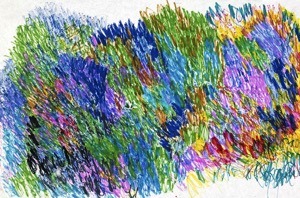
Joshua discovered this talent for his use of chalk, paint, and marker when his mother packed art supplies for him while evacuating from a hurricane. He loved to rapidly cover pieces of paper with his brightly colored strokes. He was encouraged by a visiting art professor, Mari Omori to display his artwork. Josh also took several art lessons from local visual artist Ken Grey.  His works have been featured in 11 group shows, as well as three solo shows. He distributed his works via prints and notecards for six years, raising money for various special needs nonprofits.

Art Available for Purchase

To celebrate Josh’s amazing life, his family would like to make Josh’s art available for donation to benefit Els for Autism.

Purchase Josh’s Notecards


The Benefits of a Special Interest for Individuals with Autism

An Interview with Erin Lozott, M.S., CCC-SLP

By Merrick Egber

When I was very little, I had no sense of actual identity until I played the first Super Mario Brothers for the Nintendo Entertainment System (NES), from then on I wanted to learn how to read and to become a video game designer. Then I would make friends based on how enthused they were on the topic of video games, like I was. I still didn’t have a regular hobby, though, outside of roleplaying and drawing/coloring. I could never program, or design, a video game so that was off the shelf.

As I grew up, I needed something to make myself feel more purposeful, more worth it, and to make my life more meaningful. When I got introduced to The Beatles, in my teens, I was floored! The music was sensational, I wanted to be like them! So I started writing song lyrics and poetry, and I finally found my expressive vibe. I also found my little world that I could call my home, the ‘60s countercultural world, and there were people out there that I could relate to, it was so great!

It was thanks to all of that that I finally found myself. But anyone else could’ve called my interests ‘geeky’, ‘nerdy’, (funnily enough) ‘autistic’ which I’ll always wear with pride (who wouldn’t), but my interests, instead, were celebrated. My mother would create these graphic designs to fit my poetry, I would go to Beatles festivals, and I would constantly keep on writing and writing.

In celebration of Mental Health Awareness Month, I wanted to write about this symptom of having a ‘special interest’ as being a thing worth paying attention to, and, perhaps, worthy of being celebrated. A ‘special interest’ can be a strong identifier for a person with ASD and a strong mental health helper and nobody may know it better than our Director of Clinical Services, Mrs. Erin Lozott, who it was decided to interview for this article.


Can you introduce yourself and your position at the Foundation?

My Name is Erin Brooker Lozott and I am the Director of Clinical Services and Global Support at the Foundation.


How did you get involved with the Foundation? Especially in the Clinical Services Department?

I learned about the Foundation from our Executive Director, Dr. Marlene Sotelo when she, Mrs. Els and a few key members of the Foundation toured the autism center in Atlanta I used to work at in an effort to get ideas for the buildings. Dr. Sotelo had shared my work and background with Mrs. Els and at the end of the tour, they asked if I would want to come home (since I grew up in South Florida) to work with the Foundation and help open the Center. In learning more about the mission and vision of the Foundation, in taking a trip down to see the construction site, and in volunteering at a fundraising event, it was clear to me that Els for Autism was meant to be my new professional home.

The clinical services department was a given as I have been a clinician my entire career, I was coming in with several years of experience in building a autism focused clinical practice, and had experience in managing clinical services and clinical research projects at an autism center for excellence. Dr. Sotelo and I had been professional colleagues for many years, so she had firsthand knowledge of my skills. In discussing the programs and services Dr. Sotelo was envisioning to offer at the Foundation and in aligning those ideas with the Els’ family vision for the center, hiring someone to lead and oversee the clinical services was a natural next step.


What have you learned about individuals with autism since you started working in the field of neurodiversity?

Individuals with autism are excellent employees. Individuals with autism fill in the blanks to salient details in the world individuals without autism can’t see at first glance. Individuals with autism have unique needs that often benefit from individualized supports and accommodations, and when these accommodations are made an increase in productivity and efficiency of work is occurs. I have learned that an accommodation for one, when well supported, can be transformed into an effective system change for all. I have learned to learn from others. I have learned to be a better and more active listener even when someone is communicating without words. The field of neurodiversity embraces and celebrates individual differences. It has helped me learn that ‘normal’ is not a compliment. Working in a neurodiverse field has taught me how to better match work responsibilities to individual areas of strength and interest. Working with people with autism has fulfilled my life. I have hope for my daughter and her future now that neurodiversity is a way of life in communities and the workforce.

One of the symptoms generally observed in individuals with autism is special interests – or special passions. How important is it to the overall identity of the individual with autism? How prevalent is it for people with the condition?

I feel areas of special interests are important to foster if those interested are safe and healthy and can be fostered in a manner that may fulfill the quality of life indicators all people have a right to experience. If the special interest happens to not lend to a skill safe or healthy to foster, then it is important to continue building skills while monitoring one’s areas of interest in the case a new skill learned results in a passion that can be further explored and enhanced.

I don’t know how important a special interest or passion is to individuals with autism. I think this question is best answered by people with autism. My initial thought is that each person may have a slightly different answer. Some may feel it is significant, some may feel it is a need versus how they identify themselves, and others may not even think about it. I would love to learn more about this topic. This is an excellent question to continue to explore.

Special or what is commonly termed restricted areas of interest and activities are core to the diagnosis of autism spectrum disorder. How an interest manifests in one person versus another is unique to everyone.


From your perspective, why do you think that all is? Remember, no wrong answers. 

If you are asking about why I think special interests are present, my response would be that people with autism often don’t gain input from social interactions in the same way that people without autism do. When a person with autism experiences the same level of stimulation or fulfillment as someone without autism does from social interaction, then it would stand to reason that the individual with autism would likely become hyper-focused or better yet an expert on that topic/in that area. People with autism are neurologically rewarded for paying attention to nonbiological/non-social-emotional stimuli in a similar manner that a person without autism is neurologically rewarded for engagement in social interaction.


While these types of interests may be observed as eccentricities, quirks, or non-understandable, you see the benefits of these. Can you explain the benefits from an BCBA ​or SLP perspective?  

Motivation is necessary for learning. To communicate you first need to have the motivation or intent to want to communicate. If you can establish motivation and use a strength-based method of teaching within meaningful and purposeful activities learning experiences are going to be engaging. When a person is actively engaged in a learning process, learning occurs more rapidly. Trying to teach or establish new skills in a manner that works against the grain slows down the learning process and may ultimately hinder one’s learning potential.


Let’s role play – I am a child with a distinct interest in stethoscopes. How would you work with my interest in stethoscopes?

You are so smart and creative, Merrick! This is great. I may teach all the language that goes along with a stethoscope, teach language about the professionals that work with a stethoscope, help a child learn to build words from the letters in the word stethoscope, teach money skills related to the cost of a stethoscope and include the item within word problems or learning scenarios to prompt interest. I may then teach about an actual stethoscope and use it as a representation of how to listen and attend carefully. I may integrate it into a pretend play scenario for a young child. I may take pictures and have the stethoscope become a part of a reinforcement system, learning how to count by listening in to heartbeats, etc., and many more! Hope this matches your desired response!


How can caregivers use special interests to help them communicate with an individual with autism? Are there any programs or resources that you recommend helping parents foster connection and communication with their child? 

Special interests should be seen by others as a significant part of a person with autism’s life and can serve for others to better understand the lens through which a person with autism sees the world.

It is important and research now shows it is beneficial for families and professionals to leverage the special interests’ areas of individuals on the spectrum. Families can use special interest areas to help develop language, communication, social skills, coping skills, and emotional wellbeing amongst many other skills. Engagement in special interest areas can be taught to be used as a source of self-regulation and as mentioned before these interests can be fostered into career paths or jobs.

Families and professionals can find ways to lessen or mitigate challenging behaviors by way of embracing areas of special interests. Families can help by remembering special interest areas are not hobbies or activities, but instead, they are often a way of life. To sum this point up, John Gabrieli, a neuroscientist from the Massachusetts Institute of Technology stated, “If this is their natural motivating capacity, then rather than try to suppress it, it might be more helpful to the child to build on it.”


A few strategies for families include:

  • Making a list of their child’s special interest(s)
  • Apply the identified interests of the student into various forms across teaching areas.
  • Use the child’s interest to make social connections
  • Update the list of special interests as they change while continuing to integrate the student’s interest into learning experiences


What would you call your special interest or passion? How has that informed you?

Autism-It has helped me embrace the details in life, have humility, look through multiple lenses before making a decision or judgment call, think from two polarizing perspectives, look for the light in the moments, not the days, always continue to move forward, be a better mother to my daughter, travel the world, have an appreciation for neurodiversity, and have a longstanding career that is not just a job, but instead my way of life. My special area interest in autism has helped me become the professional and person I am today. It has helped make me the best me I can be!

Employer Highlight: CAI Autism2Work

Erik Mollengarden started working as an Image Verifier at CAI, a purpose-driven business technology services firm, in December 2020. His favorite part of the job is working from home, where he uses computer software to process images of license plates from major highways for violations invoicing.

Together, Els for Autism and CAI fight to head off the hurdles that keep unemployment rates high. The shortage of vocational training, inadequate support with job placement, and cultural stigma can be major challenges for those with autism seeking employment.

Before he landed his job at CAI, Erik received vocational training through Els for Autism’s Work Experience program at Jupiter Medical Center. When the pandemic forced the program to end early, Erik and his job coach, Howard Thomas, began working together to find a position where Erik could utilize his strengths and a work environment that values his contributions and supports his needs. CAI’s Autism2Work (A2W) program was a natural fit.

Erik’s speed of verifying an average of 300 images a shift (sometimes over 400), coupled with his accuracy in identifying errors and quickly making corrections, makes him a valuable employee.

“Erik has an amazing eye for detail and catches the subtle errors that other image verifiers might not see,” Howard said. “We are really proud of him and his hard work.” Howard’s role as Erik’s job coach is to act as an extra layer of support for both the employer and employee.

“My job coach checks how I’m progressing, and I share my screen with him, and sometimes he observes me seeing if I’m checking the license plates correctly,” Erik said.

Through the A2W program, CAI maintains a company culture that is ready to embrace neurodiversity. CAI subject matter experts train employees who will be working with A2W associates and Team Leads are certified to work with individuals diagnosed with autism spectrum disorder by the International Board of Credentialing and Continuing Education Standards (IBCCES).

As a CAI Violations Enforcement Supervisor, Otilia Lynch Thomas has found working with people on the spectrum to be “inspiring.” While each person may have varying needs, Otilia consistently sees the same potential.  “You just have to have patience and get to know their personality,” Otilia said. “I want them to feel comfortable and succeed, just like everyone else.”

Dr. Marlene Sotelo Named Executive Director of Els for Autism Foundation

Jupiter, FL (May 4, 2021)—Dr. Marlene Sotelo, BCBA-D, MT-BC, has been promoted to Executive Director of the Els for Autism Foundation from her previous role as Chief Operating Officer, a title she has held since 2018. She joined the organization as Director of Programs in 2014. The announcement was made by Marvin R. Shanken, Founder and Chairman of the Board, Els for Autism Foundation, and Publisher and Founder, M. Shanken Communications.


“Marlene’s contributions to the growth, expansion and overall reach of the Foundation—from international programming to educational conferences, research initiatives and numerous partnerships—have been instrumental in making a profound and positive impact in advancing educational resources for autism spectrum disorder,” said Shanken. “We are honored to have Marlene as our new Executive Director and look forward to her continued achievements.”


Among her numerous contributions at the Els for Autism Foundation, Dr. Sotelo oversees The Els Center of Excellence ™, a 26-acre state-of-the art facility in Jupiter, Florida for onsite education for over 250 students ages 3-21, The Center provides therapeutic and professional services, recreation programs, research, transition processes for adult living, and job training.  In addition, she provides operational and programmatic support of the Ernie Els Centre for Autism South Africa and is the co-director of The Seaver Els Institute, a research partnership with the Seaver Autism Center at Mount Sinai Medical Center in New York. Dr. Sotelo’s work around the world as an international consultant and speaker, along with the Foundation’s mission to serve the global community led to the development of the Global Outreach Autism Learning Services (GOALS) at the Center.


“We are very excited for the future with Marlene as our new Executive Director,” said Founders Liezl and Ernie Els. “She has been with us for seven years and has been part of the growth of the foundation and the dream of the Center from day one. She was there when we had only a piece of dirt and has been in the trenches ever since. Her passion and dedication will be a great asset in her new role. We look forward to continue our journey of making the world a better place for those on the spectrum with her leading the way.”


Dr. Sotelo has been working with individuals of all ages with autism spectrum disorder and other developmental disorders for over 25 years. Prior to joining the Els for Autism Foundation staff, she worked for the University of Miami-Nova Southeastern University Center for Autism and Related Disabilities for 12 years as the Director of Education and Training. She earned her Doctorate in Special Education from Nova Southeastern University where she is an adjunct faculty member. She is a certified special education teacher, board-certified music therapist, and doctoral level board-certified behavior analyst.


About Els for Autism Foundation
Els for Autism Foundation was established in 2009 by Liezl and Ernie Els. The Els’ son, Ben, is impacted by autism spectrum disorder, which affects 1 in 54 children in the United States. The Foundation offers innovative, evidence-based programs for individuals across the life-span in six focus areas: Education, Research, Global Support, Recreation Services, Adult Services and Therapy Services. The Els for Autism Foundation serves families around the world, and offers in-person programs and services at The Els Center of Excellence, a 26-acre campus in Jupiter, Florida. For more information about Els for Autism, visit https://www.elsforautism.org/.

Roots & Ruts 5K Promotes Autism Acceptance and Inclusion

On April 24, 2021, Els for Autism Foundation hosted more than 300 runners and walkers in the second annual Roots & Ruts Off-Road 5K to celebrate Autism Awareness and Acceptance Month.

The race route went through the North Jupiter Flatwoods, along a certified autism-friendly trail. Participants of all ages and abilities started the race in waves based on their average mile time, which kept the race sensory friendly.

Amanda Gunter, who placed first in the 45 to 54 age category said, “The race was very well organized and so much fun! We are lucky to have The Els Center of Excellence as part of the Jupiter community. This event helps the rest of the community appreciate the wonderful resources we have right in our backyard.”

This year’s race was especially significant to Els for Autism, as it took place at the tail-end of Autism Awareness and Acceptance Month, a month-long initiative to raise awareness, acceptance, and inclusion of people with autism spectrum disorder.

“For us, the race was a way to bring the community together after this incredibly difficult and isolating year,” said Liezl Els, Co-Founder of Els for Autism. “Families could run or walk together, alongside everyone else, regardless of ability. We saw people of all ages, mothers with their babies, athletes, siblings, and grandparents. It was great for families to get out and feel a sense of normalcy.”

Despite challenges with a condition that causes seizures, 16-year-old Justin Parsons was able to finish his first 5K race alongside his mother, Brooke Parsons, as well as with his friend Jack, and Jack’s family

“It was really special because he was actually able to run for part of this 5K. And he finished it and got his own medal, and he earned it himself,” Brooke said. “He felt a great sense of accomplishment, and it was so special that he was able to experience that with his friends and even some of his teachers and therapists.”

As a runner herself, Brooke was happy to have this opportunity with her son. “It was a pretty surreal experience,” she said. “The more inclusive things can be, the better. We want to be part of the community and part of the world, and that is my hope for Justin.”

Emily Daigle commented that out of all the races she has been to, this one really stood out because of the number of children and adults of all abilities running together and having such a great time. Emily participated in the race with her daughter and son and crossed the finish line with her daughter on her back.

“Her feet where hurting and her shoes had caused blisters so I just put her on my back and continued on,” Emily said. “I feel like it’s like any other part of her life. When she struggles, I just pick her up and we get through it together.”

“The whole event was a beautiful example of what we are striving to create at Els for Autism––an atmosphere of acceptance, where everyone is welcome and encouraged to participate just as they are,” Liezl said.

View photos from the event here

Celebrating Rock Stars in the Autism Community for Autism Awareness Month

Celebrating Our Rock Stars of Autism For Autism Awareness Month!

Each year, the Els for Autism Foundation holds “Awe in Autism”, a live showcase of individuals with autism with a variety of special talents.  The event is held at The Els Center of Excellence, however, due to safety measures in place for COVID-19, we’re highlighting three personalities you must know here on the blog. They are 3 creatives with “Rock Star” potential in the Autism Community.

1st Rock Star: Alexi Go Go

From Pompano Beach in South Florida, is a band by the name of The Bango Bangos, a combination of 80s bands The Bangles and The Go Gos, which is a tribute band to decades of women who have rocked! While Lana Wise – Guitar/Backing Vocals, Lenore Goldman – Bass/Backing Vocals and Astrid Voxx – Lead Vocals/Drums/Guitar are all standouts, the most celebrated unit of the band is actually Astrid’s daughter – Alexi Go Go who also sings lead and is the group’s percussionist. Alexi has always been interested in girl groups and girl bands from an early age, and Astrid could relate to that interest – thus The Bango Bangos were born!

While having an awesome band recreating the sounds of ‘Blondie’, ‘Kim Wilde’, and ‘Garbage’ would seem to be enough, Alexi has autism and it is to the credit of the band that Alexi can be whomever she wants to be, and embrace herself as she should, another fantastic personality in the pantheon!


Q: What does Autism Awareness Month mean to you?

A: To be frank, Autism awareness means simply spreading awareness for the autistic community and rightfully amplifying the voices of those who deal with autism and those who know people that deal with autism.


Q: How has autism influenced your work?

A: Being on the spectrum has motivated me to keep pursuing my work and I’ve been told that my autism allows me to provide a very unique perspective on things on the world. Though there are obvious downs like being socially awkward, being into a bit unorthodox things and having a bit of a “childish” demeanor, my autism doesn’t really hinder me and having it actually served as a form of motivation to keep pursuing my work regardless.


Q: What would you say to someone who wants to follow in your footsteps?

A: To anyone who wants to “follow in my footsteps” I simply wish for them to try and stay positive and to not be afraid. Autism can be tough but every human has beauty within them and anyone who is dealing with autism, if someone wants to pursue anything I wish them nothing but happiness and to never give up.

Check out their web site: https://thebangobangos.com/the-shows

Follow on Facebook: https://www.facebook.com/TheBangoBangos/

Interview with Alexi Go Go: https://www.youtube.com/watch?v=A-XZrqeRMoY


2nd Rock Star of Autism: Andrew Blitman

Andrew Blitman uses his thoughtfulness and knowledge of the beauty of our world to create books filled with poetry and his own artwork. He also is a member of our Advisory Board and was featured in our virtual gallery as his love of painting becomes recognized by the greater public. Currently he works as a tutor/mentor at Firewall Centers

Q: What does Autism Awareness Month mean to you?

A: Autism Awareness Month is a time of conversation, community, advocacy, and hope. I believe that its role is to remind people with autism like me that they are not alone — that there are millions of other people facing the blessings and challenges that autism presents to them as a difference as well as a disability –, even though every case of autism is unique to each person who lives with it. Autism Awareness Month provides opportunities for me to share my experiences with autism, to help people who do not have autism understand what it is like to have it. Autism Awareness Month also gives me hope and peace of mind that people with autism and people without autism will be able to meet each other in the middle ground and collaborate as equals.


Q: How has autism influenced your work?

A: Autism has most influenced my poetry and my writing — those things taught me how to express myself clearly and gave me many topics to write about. My experiences with autism have also pushed me to force myself through my limitations, and given me bursts of intensity that have allowed me to create complex written works and visual art pieces in short, hyper-focused periods of time, when much of the work comes out intact — almost completely unchanged between the first image and the final product.


Q: What would you say to someone who wants to follow in your footsteps?

A: The most important thing I would say to someone who wants to follow in my footsteps is to persevere through every trial that life throws at them because life is precious even in the worst moments, that no matter how far you fall there is success and insight in the struggle that leads to growth, redemption, resilience, and the empathy that will give you the ability to lead others with similar negative experiences to victory over them. I must also stress that one must first be able to cultivate himself/herself before leading others (i.e.: that self-care and self-compassion must come first), and that there is no shame in asking for help.


Enjoy his web site filled with poetry, his artwork, and other writings – https://andrewblitman.com/

And read our review of one of his animal-themed Poetry books here –

https://www.elsforautism.org/to-think-like-the-animals-a-review-of-andrew-blitmans-work-and-mini-interview/


3rd Rock Star of Autism: Stephen ‘Mr. Hollywood’ Lepore

Mr. Hollywood has been a popular fixture of our Foundation for years, especially for his unwavering optimism and amiable personality. He has not only been very talented as an actor in our theater program, but he is also a very talented singer and scriptwriter. He got nominated for the 2020 Autism Spectrum Award too! We are still hoping for a movie to be made of “The Adventures of Stephen Lepore”.


Q: What does Autism Awareness Month mean to you?

A: Love seeing all the support and awareness out there! It means people are understanding that I am no different than they are.


Q: How has autism influenced your work?

A: My ability to create soap names comes easy to me because I remember so much. It’s easy for me to manage the work. My intention to detail is very good. Therefore, I am able to catch mistakes.


Q: What would you say to someone who wants to follow in your footsteps?

A: Come on! Anyone can do anything they want. We all just do it differently. Making my soaps is like therapy for me. It’s very relaxing and relieves stress. I meet so many different people selling my soaps. And if they don’t know about Autism when they meet me, they do now. I help my community and spread awareness as I go.


To buy Stephen’s soaps you can find them here: https://mrhollywoodsoaps.com/

Follow his business on Facebook: https://www.facebook.com/mrhollywoodsoaps/?__xts__[%252Ffacebook]

Stephen is one of many personalities who have found love in our theater program which I wrote about here:

https://www.elsforautism.org/theater-program-provides-game-changing-benefits-for-individuals-on-the-spectrum/

30 Quotes from 30 People with Autism

By Merrick Egber


John Elder Robison – Author, ‘Look Me In The Eye: My Life with Asperger’s’

“I don’t want to be a genius or a freak or something on display. I wish for empathy and compassion from those around me, and I appreciate sincerity, clarity, and logicality in other people. I believe most people—autistic or not—share this wish. And now, with my newfound insight, I’m on the way to achieving that goal. I hope you’ll keep those thoughts in mind the next time you meet someone who looks or acts a little strange.”


Dr. Temple Grandin – Professor of Animal Husbandry, Colorado State University.

“I am different, not less”


Dan Akroyd – Famous Actor ‘Ghostbusters’ ‘Blues Brothers’

“I also have Asperger’s but I can manage it. It wasn’t diagnosed until the early Eighties when my wife persuaded me to see a doctor. One of my symptoms included my obsession with ghosts and law enforcement — I carry around a police badge with me, for example. I became obsessed by Hans Holzer, the greatest ghost hunter ever. That’s when the idea of my film Ghostbusters was born.”


Dr. Stephen Shore – Special Education Professor, Adelphi University, Advisory Board Member

“If you’ve met one person with autism, you’ve met one person with autism.”


Naoki Higashida – Author ‘The Reason I Jump’

“Everybody has a heart that can be touched by something.”


Dr. Kerry Magro – National Speaker, Advisory Board Member

“Autism can’t define me,  I define autism.”


Kayla Cromer – Actress, “Everything’s Gonna Be Okay”

“Being on the spectrum and having other learning differences, I am used to working harder and have a great drive to succeed. I interpret things differently, which helps with analyzing scripts, engulfing myself into roles, to achieve realism. [It] also drives me to make strong choices.”


Haley Moss – Attorney, Autism Spectrum Award Winner 2019, Advisory Board Member

I might hit developmental and societal milestones in a different order than my peers, but I am able to accomplish these small victories on my own time.


Ron Sandison – Professor of Theology at Destiny School of Ministry. Advisory Board Member. 

“Help people with autism to be included in social activities. By doing this people learn that individuals with autism are like everyone else and desire to have friendships.”


Paul Morris – Assistant, New York Medical College of Human Resources – Advisory Board Member

“I think that it is not only autistic people who need to learn. The people who don’t have autism must learn to understand us and be tolerant”


Andrew Blitman – Tutor and Mentor, Firewalls Centers – Advisory Board Member

“Streams of words

Flow as drops on paper

From the fountain pen,

Their source.

Communication is easy when written,

But when spoken it often feels forced.”


Sue Abramowski – Human Services Professional – Advisory Board Member

“At the end of the day, despite our differences, my [Neurotypical] brother and I complement each other. He serves as a sounding board for when I need to vent, and I do the same for him. He gives me financial pointers, and I give him advice on what to do next when he is contemplating options in a given situation.”


Rachel Barcellona – Pageant Professional – Autism Spectrum Award Winner 2017 – Advisory Board Member

“Everyone has a mountain to climb and autism has not been my mountain, it has been my opportunity for victory.”


Merrick Egber – Administrative Assistant, Els for Autism Foundation – Chair of the Advisory Board

“I used to think, when I was first diagnosed with Asperger’s Syndrome – a form of autism, about what I can’t do, rather than what I can do, which was a mistake in thinking”


Tony Hernandez Pumajero – Collaborator, Despierta Orlando – Univision TV, Advisory Board Member

“My focus is to continue to advocate on behalf of people with autism, especially adults, for better programs and services that will help them achieve a more independent and greater life. Regardless of the function level, every person with autism has an important role to play as the agents of change that the World truly needs”


Adam Jones – Barn Attendant at Madison Fields – Part of the Madison House Autism Foundation, Autism Spectrum Award Winner 2018 – Advisory Board Member

“When people pursue their interests, especially those that are on the autism spectrum, they have a better chance at succeeding in life.”


Mike DiMauro – UberEats Driver, Advisory Board Member

“We  need to have kindness in this world, we need to have peace in this world, and we need to have forgiveness in this world”


Jim Hogan – Principal Innovation Strategist – Google, Autism Spectrum Award Winner 2020 – Advisory Board Member

“my activism is not about ending Autism, it is about ending cruelty – with a focus on the horrendous cruelty of bullying”


Susan Boyle – Famous Singer – ‘I Dreamed a Dream’, ‘Wild Horses’ 

“There are enough people in the world who are going to write you off. You don’t need to do that to yourself.”


Dan Harmon – Famous Showrunner –  ‘Community’, ‘Rick & Morty’

“We float around and we run across each other and we learn about ourselves, and we make mistakes and we do great things. We hurt others, we hurt ourselves, we make others happy and we please ourselves. We can and should forgive ourselves and each other for that.”


Sir Anthony Hopkins – Famous Actor – ‘Silence of the Lambs’, ‘The Father’

“My philosophy is: It’s none of my business what people say of me and think of me. I am what I am, and I do what I do. I expect nothing and accept everything. And it makes life so much easier.”


Daryl Hannah – Famous Actress – ‘Splash’, ‘Bladerunner’

“Life is too short to stress the small things anymore.”


Stephen Wiltshire – Famous Landscape Sketch Artist

“Do the best you can and never stop”


Gloria Mendoza – SAP S/4HANA Technical Quality Manager – 2016 Els for Autism Spectrum Award Winner

“You should see some of the videos I had when I was a child, I was not very socially skilled with the other kids, not showing interests with other people, displaying some of the challenging behaviors that a child, on the autism spectrum, would have.”


Joshua ‘Deersey’ Deer – Assistant Equipment Manager at Lone Star Brahmas/NA3HL Texas Brahmas – 2015 Els for Autism Spectrum Award Winner

“For every tournament, any PGA Tournament Jordan, Ernie and Ryan play in, I always look up bible verses related to golf, and I set them up as character goals,” Deer says, “to help them with their character, and to help them stay positive.”


Hannah Gadsby – Comedian ‘Nannette’ ‘Douglas’

“when I was diagnosed, it just gave me permission to be kinder to myself, to not always take responsibility for being a bit clumsy around other people, and allow me to start to tell people, “I’m clumsy, but I [don’t] mean to be.” And being more open about, “I need you to tell me what I did wrong, and then we can move on from there.”


Dani Bowman – Head of DaniMation Studios – an Animation Company

“Anything Is possible! If I can do it, so can you!”


Xavier DeGroat – Head, Xavier DeGroat Autism Foundation

“I got doubted when I was a kid. ‘You’re never going to meet the Dalai Lama [and] you’re never going to do this or that. That’s the exact kind of thing I don’t appreciate in people.”


Dr. Mary Doherty – consultant anaesthetist, Our Ladies’ Hospital.

“It was only when my son was diagnosed as autistic that everything finally made sense: my unconventional lifestyle and career path, my sequential interests which are unusual in their variety and intensity, my sensory preferences and my absolute need for solitude. Finally understanding that my experience of the world is different from that of non-autistic people allows me to understand my needs and ensure they are met, and at this point I love being autistic and no longer struggle with mental health issues.”

A Summarized History of Autism

By Merrick Egber

In celebration of Autism Awareness Month in 2017, I wrote a thought-provoking and revelatory three-part series about the history of autism. For this month’s blog post, I decided to summarize what I learned in writing that series.

The first person to coin the term ‘autism,’ which comes from the Greek word ‘autos’ or self – was a Swiss psychiatrist named Dr. Eugen Bleuler (photo featured above) in 1911. He saw a series of symptoms in a subset of what he saw as schizophrenic patients – schizophrenia was another term he coined – that were all related enough to create a new diagnosis. His impression of ‘autism’ was that it left the patient “entirely withdrawn, oblivious to the people around them, and completely self-absorbed.”

When autism became separate from schizophrenia is a debated topic. Some would say it was Soviet neurologist – Grunya Sukhareva – in 1927, still others would point to the much more prominent example of Dr. Leo Kanner, an Austrian child psychiatrist who had a practice in Baltimore, Maryland. There he would welcome an individual from Forrest, Mississippi known as Donald Grey Triplett or “Client No.1” who was the first individual formally diagnosed with autism, though it was called “infantile autism” by Dr. Kanner. Dr. Kanner noticed that Mr. Triplett did not share any of the characteristics of what was considered ‘schizophrenia’ and instead exhibited many unusual traits that he had never seen before but were understood to be autistic.

Around the same time, another Austrian psychiatrist, known as Dr. Hans Asperger was making breakthroughs in the research he conducted on individuals who shared many of the same traits as Donald Grey Triplett. He spent more time with his patients through their stages of living and even opened a school for his specialized clients. It was over a decade after his death in which the variant known to him, and my variant, would be characterized as “Asperger’s Syndrome.” His reputation, however, has been marred by his questionable associations with the Nazis, which I’ve discussed with my co-host Dr. Nate Shanok on the Fore! Autism Podcast – officialized by our Foundation  on the latest episode and one of our favorites.

In the 1960s, one of the foremost theories of why autism existed came in the form of a discredited professor of the University of Chicago named Bruno Bettelheim. Mr. Bettelheim postulated the “Refrigerator Mother theory” which supposed that autism was caused by the lack of proper treatment and care by the mother to the child. While this has fallen by the wayside of mainstream scientific consensus, there are still people, and parts of the world, which believe this theory still holds weight.

It was only after the deaths of Dr. Kanner and Dr. Asperger, in the early ‘80s, when autism would become known as it is now. Movies like “Rain Man,” while an antiquated understanding of what autism is, have helped cement the idea of who a person with autism is in the popular consciousness, and people like Dr. Temple Grandin have helped to show how complex our lives really are. Organizations have sprung up, like ours, dedicated to helping us tell our stories, and to help us live the lives we really want to live, one day at a time.