A Capital Campaign for the RECREATION COMPLEX

Expanding recreation activities available at The Els Center of Excellence® campus.

Recreation Complex

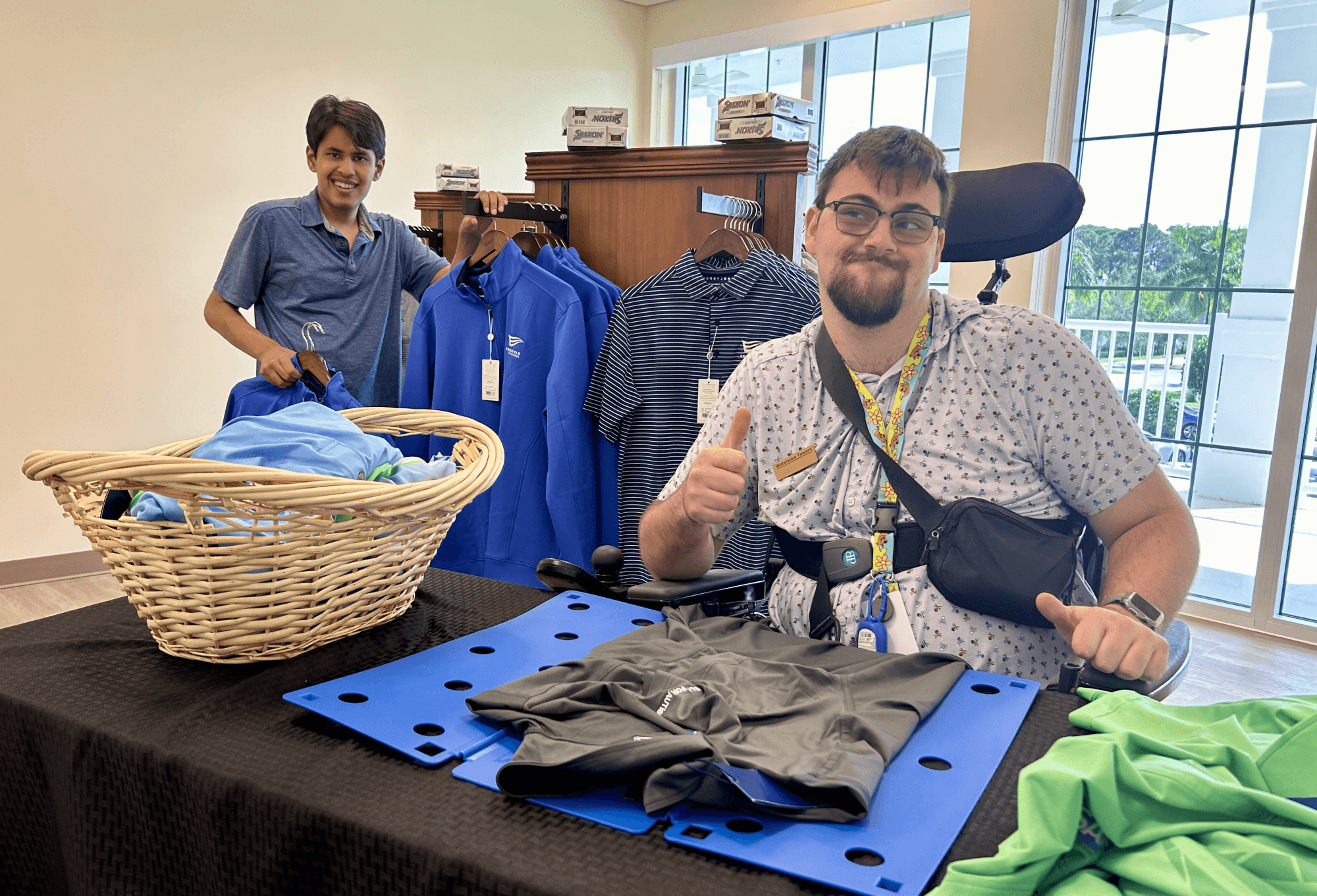
New Golf Pro Shop Vocational Lab Powered by ClubsHelp Debuts at The Els Center of Excellence®

In August 2023, the Els for Autism Foundation® opened the Stoops Family Adult Services Building at The Els Center of Excellence® campus, a 21,000-square-foot purpose-built building for adults with autism spectrum disorder (ASD) and other related disabilities. The building expands programs and services for adults with ASD, including paid employment exploration and training. Some of these opportunities are within the golf industry, including both on- and off-course positions.

With the generous support of the ClubsHelp Foundation, the Els for Autism® introduces a new Golf Pro Shop vocational lab, creating opportunities for individuals with ASD to explore careers in the golf industry. ClubsHelp Foundation is a nationwide network harnessing the power of clubs and their resources.

“Through this collaboration, ClubsHelp will support and amplify the skills and talents of these individuals, using our network of clubs across the country to create employment opportunities,” said Rob Goulet, President of the ClubsHelp Foundation. “The Els for Autism staff has the experience and knowledge to train clubs on recruiting, hiring, onboarding, and retaining employees with autism. And we’ll work through human resources professionals at clubs to communicate the advantages of employing people with autism.”

The Els for Autism Work Experience program allows adults aged 18 and over who have exited the school system to engage in hands-on learning and develop skills related to employment.  Participants of the program in the new Golf Pro Shop vocational lab will learn to sort and tag merchandise, organize displays, operate point-of-sale terminals, and other retail-centric skills.

Many individuals with autism exhibit specific strength traits that allow for these positions to be a good fit for golf industry jobs. The main strengths identified from data revealed cognitive advantages, including attention to detail, creativity, focus, and memory. Additionally, individuals with ASD often thrive in repetitive tasks and inhibit personal qualities such as honesty and dedication. Jobs that require following a set of procedures and protocols are many times a good fit for someone with autism who is detail-oriented and prefers routine.

“This facility is so important for adults with autism and will help those individuals successfully transition to adulthood by providing employment services, therapeutic services, day training, recreation, and social activities,” said golf legend Ernie Els.

Els, along with his wife, Liezl, and Marvin R. Shanken, publisher and founder of M. Shanken Communications, founded the Els for Autism Foundation in 2009 following the diagnosis of the Els’ son, Ben, with ASD.

ClubsHelp Foundation, a 501(c)(3) organization, empowers golf clubs to become community catalysts. Originating from the generous spirit of Spring Brook Country Club in Morristown, N.J., during the COVID-19 pandemic, ClubsHelp has rapidly grown into a national initiative, receiving support from legendary golfers Jack Nicklaus and Els, as well as from some of America’s top clubs and corporations.

Uniting golf course owners, club managers, architects, and professionals to amplify clubs’ contributions to local causes and charities with a single mission: Care Locally, Unite Nationally. ClubsHelp provides clubs with tools and resources to enhance their impact within their communities and help during times of crisis. Visit ClubsHelp.org or on social media at @ClubsHelp to join in transforming golf clubs into beacons of community support.

Information about Ernie Els #GameON Autism® Golf program, developed and provided by Els for Autism, can be found here bit.ly/ernie-els-game-on-autism-golf.

Fall Recreation Tips for Individuals with Autism

After a sweltering summer, we are all enjoying the cooler temps the fall brings us. Now that the weather is cooler, it is a great time to be outdoors and participate in recreation programs. We believe recreation can be an effective supplemental therapy for individuals with autism.

Whatever brings you to the outdoors, we hope you take advantage of the autumn season by incorporating recreational activities.

Our recreation team has some tips for staying safe while playing.

Stay Hydrated: Ensure you fuel your body with the proper nutrients and adequate amounts of water to stay active and engaged during recreation activities, especially outside activities.

Listen to your body: Pay attention to your body’s signals, such as when you might need rest, water, or are ready to move to something new.

Try it with friends: Recreation is a great way to meet new people and make friends. Participating in sports and fitness with others can help you stay motivated and make getting fit with friends so much more fun!

Make it right for you: Remember, there is always a way to modify or adapt a workout, sport, or activity to fit your needs, skill level, and interests. While this is important, ensuring proper form is crucial when performing any exercise and even more so for individuals with autism. Providing a model, whether in-person and/or via video, supports proper form and safety.

Try something new: Don’t be afraid to try a new sport or activity. You will not know if you like it until you try it. It could become your new favorite thing!

Practice, practice, practice: Remember that learning a new skill might be difficult initially, but it is essential to keep going. You’ve got this! Consistent practice will lead to progress and proficiency before you know it.

Have fun: Always remember that recreation is meant to be an enjoyable way to spend time with friends while living happy, healthy lives.

Learn more about our recreation programs & services

Els for Autism announces the 2023 Autism Spectrum Award Winner

By Merrick Egber

Since 2015, we have awarded an individual representing the tenacious spirit of autism spectrum disorder (ASD) from the U.S. and Canada. The Autism Spectrum Award (ASA) winner receives an engraved award, an invite to the Golf Challenge Grand Finale, and a nomination to sit on the Els for Autism® Advisory Board. Over the years, the winners have represented excellence in self-advocacy, empathy, and pursuing the dreams that have captivated the population who can follow them.

The winner for this year is Andrew Blitman. While Andrew Blitman possesses a creative drive as a painter, author, and poet, he also aspires to make the world a better place through mentoring and tutoring in subjects like math and science. While congratulating Andrew on his win, we decided to interview him for our blog.

What was it like growing up with autism?

“Growing up with autism was socially challenging and affected me well beyond childhood. I had trouble making long-lasting friendships. The memories of bullying in elementary school left me socially timid and afraid of expressing vulnerability through early adulthood, and the desire to have relationships with my peers often embarrassed me. I also had anger issues and loathed myself for feeling inadequate compared to my neurotypical peers. I felt isolated, lonely, and unworthy of love, even around people who genuinely cared about me and enjoyed my company.

“However, I was still intellectually intact, and I loved reading, writing, painting, science, and video games, among other things.

“While I had trouble making and retaining friends, I started developing close friendships with mostly neurotypical peers in the 10th grade. I understood that what was keeping me back was more myself than the classmates who found me to be a valuable person to be around with. From the 11th grade to my first year of graduate school, my friends helped me develop my social skills, and I am thankful for that. The skills that I had helped me develop the tools to help me deal with any depressive moods today.

“But, for the sake of time, let me thank you [Merrick] and everybody else at the Els for Autism Foundation® for this excellent ASA that – I need to say – has taught me that my autism diagnosis is a blessing, and for the first time, I am grateful to have autism because it taught me also the role of persistence as the road to victory and vindication and then – happiness!”

How does your autism influence your poetry?

“Reading and writing poetry and promoting my written works helped me build my vocabulary, while my autism helped me develop the unique self-expression you see in my works. One thing that has been most crucial to my poems over the past eight years is that, aside from prepositions and articles like “a” and “the” and conjunctions, I avoided repeating words while writing them.

“Often, I used synonyms and rhyming words rather than words more than once in the poems. In doing so, I learned diction and the art of word choice to avoid repetition. It also helped me understand my rhythm of writing in general, like how I learned the basic pattern for most popular songs. The components of most songs with words are a title (often included in the lyrics) and alternating rhyming couplets (every two lines end with words that rhyme at the end).

“Music and poetry opened new doors for me, as music helped improve my poetry while my poetry helped me become a better speaker and improve my communication skills overall. It helped me overcome mental barriers and depression and helped me feel more comfortable conversing with others verbally. The boosted vocabulary catapulted me past my limits regarding aspects of my life after college. It led to the rapid development of a mind-grinding body of creative works to fall back on when I feel depressed about where I am, and so long as it drives me in my creation of these works, it keeps me happy!”

How did you get involved with Els for Autism®?

“I have been involved in the South Florida autism community since 2011 when I served as a constituency board member for UM-NSU CARD (University of Miami-Nova Southeastern University Center for Autism and Related Disorders). I used CARD services when I was young. After graduating college and graduate school in around 2014, my parents introduced me to the Els for Autism Foundation, which helped me reconnect with Dr. Marlene Sotelo after I had moved back home after six years of living in Miami for school. I asked to be a summer camp counselor for the Center’s Movin’ and Groovin’ Summer Camp in 2014.

“That was the first time I met you, Merrick! I had a wonderful time at the summer camp and was offered to work on future programs at The Els Center of Excellence®. After my term as a UM constituency board member ended in 2017, I got to join the Els for Autism’s Advisory Board in 2019, and the rest is history.”

What do you do to support Els for Autism?

“I am a professional artist and a multi-published author. I love working for the Foundation as an Advisory Board member and being an art teacher for the past two consecutive summer programs (2022 and 2023). I also interviewed my friends at the Foundation and other leaders of the South Florida autism community on my website. I also donated more than 20 of my favorite original paintings to the Els for Autism Foundation, for which the Foundation receives 75 percent of the proceeds as a donation. When Amazon Smile was available, which would give a percentage of Amazon purchases to the charity of the purchaser’s choice, I chose the Els for Autism Foundation.”

What is your favorite painting that you did, and why?

“I would say my favorite painting is the Mandarin Duck Painting, which always captivates me when I look at it because it was an early project but one that demonstrated a skillset that influenced later works. I love it!”

Why is a foundation like the Els for Autism Foundation so significant?

“The Foundation is so important because it helps children and adults with autism and other developmental disorders find ways to counteract the symptoms they are experiencing daily. They connect people diagnosed with autism to healthcare and mental health services and help their families find ways to cope or improve their loved one’s outcomes with early intervention if necessary. Els for Autism has this fantastic community service/outreach department that actively welcomes and tends to struggling families.

“The Foundation’s Advisory Board is also extraordinary—as the only two autism assistance organizations I am currently aware of that select people with autism, including young adults, to serve in leadership roles: Els for Autism and UM-NSU CARD. I was the first-ever constituency board member at UM to have autism. Both organizations actively ask people with autism for guidance with their research and for opinions to improve community service roles with direction for their outreach programs.

“Both Dr. Sotelo (Executive Director of Els for Autism) and Dr. Michael Alessandri (Board Chair of Els for Autism & Executive Director of the University of Miami CARD) revolutionized the way autism diagnoses work. They actively and openly welcomed the opinions and advice of people who have autism to guide their organizations’ policies as equals on these boards. I believe that they should be commended and appreciated for doing something so trailblazing that is yet so basic—that people with autism can have a say in the laws, regulations, and policies that concern them. That people with autism can advocate on behalf of themselves and for others whose voices are silent or marginalized in their communities.”

What is so important about being an educator in this society?

“Educators are the people who most directly influence the lives of the generations after them. We teach, help, and empathize without judging. We protect them from ignorance while connecting them to the resources they need to survive and thrive. Outside of the home, only teachers and other students spend the most time together throughout the day.

“Educators are essential now more than ever because we strongly influence the lives of our students. We are the emotional rocks for our students. Even one empathetic conversation with a child can save a life. It only takes one unexpected or traumatizing experience to cause a mental health collapse.

“Educators are supposed to be beyond reproach, but they should not replace the involvement of parents, siblings, and family members. The educator’s role should be a bit like that of a consultant, to help identify strengths and weaknesses and provide solutions for children and their families.”

Who is your most excellent role model?

“The two most important role models are my dad and my grandfather, who have taught me so many life lessons and given me such great joy, which I finally now appreciate. Their quotes, insights, and advice have guided me forever to this day and beyond.”

What does winning the ASA mean to you?

“To tell you the truth, the Autism Spectrum Award is the equivalent of the Nobel Prize, but as proud as I am of it, I am still in gleeful disbelief. However, I am thrilled to have won because it proves that my contributions to art, science, poetry, and other things positively impacted the world around me.

“I would call it an affirmation, but I am not the only one who deserves the credit for this great honor. I share this award with my family, friends, teachers, you, the Foundation, and hundreds of other people whose lives intersected with mine over the past 33 years and who believed in me and my work, and that my experiences with autism are not so bad anymore.

“This is the first time in probably my entire life I can say I am happy to have autism. Perhaps my struggles were vindicated, and I can move forward and continue to help people in need whenever my experiences are relevant to their problems.”

What advice would you give about adversity and living with autism?

  1. When in crisis, ask for help! If you see someone in trouble, help them or find someone who can help them because the worst thing you can ever be is a cowardly bystander.
  2. Harness your intellect and learn as much as you can because no knowledge goes wasted, and doing so can help you identify your direction in life, career-wise, or in other ways.
  3. Force yourself to be social, even if you do not like it, because that is how you make friends.
  4. You do not need to have so many close friends. You can find equal joy in having multiple friendly acquaintances.
  5. Follow your hobbies and passions, but do not rely on those skills alone.
  6. You do not have to like your job. Sometimes, it is okay to have a steady job and follow your passions and hobbies in your spare time.
  7. Stay off social media, especially Facebook and LinkedIn. It is fake and potentially fatal (Fear of Missing Out or FOMO) once you are addicted. You know you hate it, and it is killing you, so put your health first, quit, and protect your privacy.
  8. This is not my quote, but it is from a talented poet named Charles Bukowski:

“There are worse things

than being alone

but it often takes

decades to realize this

and most often, when you do

it is too late

and there is nothing worse

then too late.”

― Charles Bukowski

Thank you, Andrew Blitman, for taking the time to answer these questions. Since he has served on the Advisory Board since 2019, Dr. Shanok and I interviewed him for the official podcast of the Els for Autism Foundation, the Fore Autism Podcast, last year. His episode is Episode 26: Creative Arts: Stimulating Mental Health with Andrew Blitman and Graziella Gadia. Listen to it here.

Stanley Black & Decker pledges $5 Million for Autism-Friendly Recreation Complex

Stanley Black & Decker, a leading global provider of tools, equipment, and services for the construction, industrial, and manufacturing industries and brand partner of World Golf Hall of Famer Ernie Els, has pledged $5 million over five years to support the capital campaign to build the recreation complex at The Els Center of Excellence in Jupiter, Florida.

Research proves that participation in recreational programs has shown extensive benefits for children with autism spectrum disorder (ASD). It can reduce behavioral and emotional disorders, aid in developing social skills and forming relationships, enhance physical and mental health, and support the formation of children’s interests. Every week, Els for Autism® offers multiple recreational programs, including golf, kickball, and tennis, on The Els Center of Excellence campus, serving more than 100 individuals with autism annually.

The recreation complex will allow programming to expand by providing an indoor space during inclement weather and high temperatures. The complex will include the autism-friendly Stanley Black & Decker Gymnasium, an aquatic center, and a splash pad. Drowning is the number one cause of death for children with autism, and an aquatic center for people with autism will allow for specialized water safety and swimming instruction as part of the Ernie Els #GameON Autism® Sports Programs.

“We are thrilled to have the support of Stanley Black & Decker in building this much-needed recreation complex,” said Marlene Sotelo, BCBA-D, MT-BC, Executive Director of Els for Autism. “The gymnasium and aquatic center will provide a safe and inclusive space for individuals with autism to engage in physical activity and learn life-saving water safety skills. We are grateful for Stanley Black & Decker’s commitment to supporting the autism community and helping to transform the lives of people with autism and their families.”

In addition to the generous pledge of support for the recreation complex, Stanley Black & Decker also funded and outfitted a vocational lab in the brand-new Stoops Family Foundation Adult Services Building. The lab will be supplied with tools and equipment donated by Stanley Black & Decker to provide adults with autism training to support paid employment opportunities.

“We are proud to partner with Els for Autism in this important initiative to provide resources and support for individuals with autism and their families,” said Don Allan, President and CEO of Stanley Black & Decker. “We believe that by investing in programs like the recreation complex and vocational lab, we can help create a more inclusive and supportive society for individuals with autism and their families.”

Stanley Black & Decker is also designated as the National Sponsor of the 2023 Golf Challenge through a $125,000 contribution. In addition, President and CEO Donald Allan, who has supported the Golf Challenge since 2020, is an event Co-Chair of the regional Golf Challenge event held August 7 in Hartford, Connecticut, at the Wethersfield Country Club.

“The partnership between Stanley Black & Decker and Els for Autism is remarkable. It is a joy to collaborate with the SBD team and their network of supporters, all of whom demonstrate an understanding of the need to transform the lives of people with autism and those who care for them,” said Paige Thomas, Director of Events at Els for Autism.

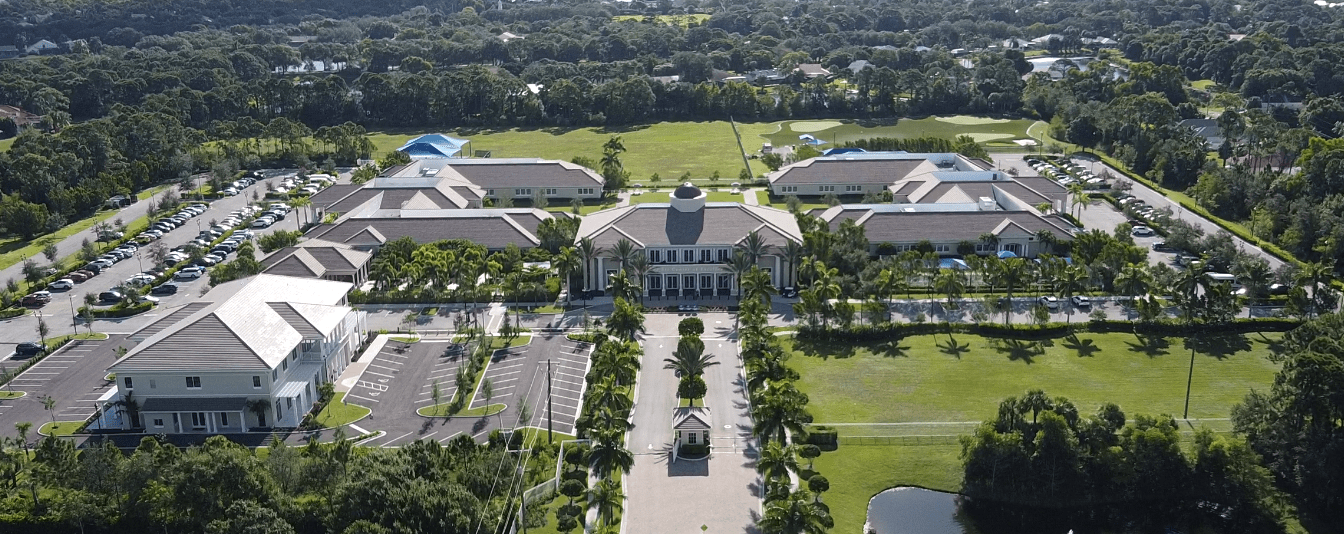
The Els Center of Excellence is a world-class facility that provides education, therapy, research, recreation, and adult services for individuals with autism and their families. The capital campaign to build the recreation complex is a more significant effort to expand and enhance the facility’s programs and services.

Thanksgiving Social Narrative

With the fall season come social gatherings and traditions many look forward to every year. However, these events can also present unique challenges for individuals with autism spectrum disorder (ASD), from routine disruptions to noisy gatherings. That’s why Els for Autism Foundation® remains committed to providing you with information on best practices and guidance to ensure your holiday season is filled with happiness and memorable moments.

We have created a Thanksgiving Social Narrative to work on with your child before the holiday.

Els for Autism Celebrates National Disabilities Employment Awareness Month 

Jupiter, Fla. – October marks National Disabilities Employment Awareness Month, a time to recognize and celebrate the talents and contributions of individuals with disabilities in the workforce. Els for Autism® is proud to be at the forefront of this movement by providing essential support and employment opportunities for adults with autism spectrum disorder (ASD) and other developmental disorders through programs & services, initiatives, and partnerships.  

Less than half of young adults with ASD are employed despite having the knowledge and abilities necessary for success in the workplace. (Source: Solomon, C. Autism and Employment: Implications for Employers and Adults with ASD.) 

Employers often find individuals with ASD and other developmental disabilities to be exceptionally dedicated, excelling in attendance, punctuality, job tenure, and following workplace policies. Furthermore, companies that actively employ individuals with disabilities report impressive statistics, including an 89% higher retention rate, a 72% increase in employee productivity, and a 29% increase in profitability. 

In August, Els for Autism opened the Stoops Family Adult Services Building on The Els Center of Excellence® 26-acre campus. This 21,000-square-foot purpose-built building features several vocational labs designed to equip individuals with the necessary skills to obtain employment. These vocational labs include the Stanley Black & Decker Lab, the Big Easy™ Cafe by Ernie Els, and the Sea of Possibilities microbusiness. With the opening of our adult services building, we are providing more employment opportunities to adults with ASD. Discover how to support adults seeking employment, including the opportunity to name our grocery store or retail shop. 

While our team equips autistic adults with employment skills on our campus, our Employment Programs help adults secure employment within the community while helping employers fill needed positions. Our Work Experience program offers services that encompass developing self-advocacy and employability skills, assisting with job development, providing job leads, aiding in the interview process, and supporting job retention. Job coaching is offered before, during, and following placement in paid employment. Employers are invited to become a Work Experience Program Partner. 

In addition to our Employment Programs, Els for Autism is thrilled to introduce our newest initiative,
U Can Employ™. This groundbreaking program provides direct training, support, and consultation to both large and small companies interested in recruiting, hiring, onboarding, and retaining employees with ASD. Marlene Sotelo, BCBA-D, MT-BC, Executive Director of Els for Autism, stated, “Through the U Can Employ initiative, we aim to increase employment opportunities for individuals with ASD by providing the necessary training, consultation, and support to companies looking to create a more diverse and inclusive workforce.”  

The Big Easy™ Cafe by Ernie Els

The Big Easy™ Cafe by Ernie Els is another way the Els for Autism Foundation® is transforming the lives of individuals with autism spectrum disorder (ASD).

Located inside the Stoops Family Adult Services Building at The Els Center of Excellence®, our cafe offers homemade breakfast and lunch options for employees, students, clients, and guests on our campus under the direction of Jen and Brian Wilson.

The dynamic duo is well-known in the community for their succulent cuisine. They have developed the cafe’s menu to focus on a brain and gut-friendly diet by serving gluten-free, dairy-free, and low-sugar-style foods with other delicious selections.

However, the Big Easy Cafe is more than just a cafe; it is a vocational lab where adults with autism and related disabilities acquire essential skills for excelling in the food industry! Our cafe also provides specialized culinary workshops designed to cater to individuals with ASD and their families within our community, both live and online.

We are a closed campus; however, if you are on campus to drop off or pick up your child, we hope you will stop in to our cafe inside the Stoops Family Adult Services Building to enjoy some homemade happiness. Pre-order your items on Toast.

Creating a Spooktacular Trick or Treat with AAC Boards and Sensory-Friendly Costumes

For individuals with autism spectrum disorder (ASD) who use Augmentative and Alternative Communication (AAC) or require sensory-friendly accommodations, here are some tips and tricks to ensure this festive occasion is a safe and enjoyable spooktacular Halloween experience for everyone involved.

Communicating with AAC or Visual Aids

1. Preparation is Key

Before heading out for trick or treating, ensure the AAC device is fully charged and properly working. Have backup batteries on hand, just in case. If using visual aids, ensure they are printed and ready to go.

2. Customize Vocabulary

Tailor the AAC device’s vocabulary for Halloween-specific phrases and expressions. Include phrases like “Trick or Treat,” “Thank you,” and “Happy Halloween!”

3. Practice with Play

Engage in role-playing scenarios at home to help your child become comfortable saying or using their AAC device to communicate trick-or-treating phrases. Encourage them to initiate interactions with neighbors and practice beforehand.

4. Be Patient and Supportive

Allow extra time for communication, be patient, and offer encouragement when your child uses their AAC device or visual aid. Praise their efforts to build confidence.

Sensory-Friendly Costumes

1. Comfortable Fabrics

Opt for costumes made from soft, breathable fabrics to minimize discomfort. Avoid itchy materials that may irritate.

2. Seamless Seams

Choose costumes with minimal seams or rough edges to reduce sensory sensitivities. Consider inside-out costumes for a smoother feel against the skin.

3. Adjustable Fasteners

Opt for costumes with adjustable closures like Velcro or snaps rather than tight-fitting elastic or buttons. This allows for a custom fit and can help prevent discomfort.

4. Sensory-Friendly Accessories

Incorporate sensory-friendly accessories like fidget toys or chewable necklaces into the costume. These can provide comfort and serve as a soothing distraction.

5. Open-Faced Masks

Consider face paint or masks that leave the eyes and mouth area open. This allows for better airflow and reduces feelings of confinement.

Remember, Halloween is a time for fun and inclusivity. By implementing these tips, you can create a memorable experience for children of all abilities. Happy Halloween!

Reference
For additional resources and ideas on AAC communication and sensory-friendly costumes, check out organizations like PrAACtically AAC and The Marcus Autism Center.

Pumpkin Spice Recipes

We are jumping on the pumpkin spice train to celebrate the Big Easy™ Cafe by Ernie Els (Toast Link) opening inside the Stoops Family Adult Services Building. Cafe Manager Jen Wilson has four pumpkin-spice treats to make with your family and friends.

Ginger Snap Parfaits

At our house, we love the fall and mixing our favorite pumpkin pecan butter (often a bit too sweet) with non-dairy plain yogurt or plain Greek yogurt. Layering this pumpkin yogurt mixture with plain yogurt and homemade gingersnaps is often the perfect combination of creamy, crunchy, and delicious!

Ingredients
¾ Cup Butter
1 Cup Sugar
1 Egg
2 Cups Flour
½ Tsp Salt
1 Tsp Cinnamon
½ Tsp Ground Ginger
1/3 Cup Molasses
2 Tsp Baking Soda

Directions

  1. Cream Butter and sugar
  2. Add Egg and mix
  3. Add dry ingredients and stir
  4. Heat molasses, add soda, and stir
  5. Add to Flour mixture and stir
  6. Roll dough into small balls and space out evenly on a buttered cookie sheet
  7. Bake at 350 degrees for about 12 minutes
  8. Remove from pan carefully and cool on a rack or paper towels

Pumpkin Cheese Roll

We make this every year on Thanksgiving, and there’s never a single bite left. It packs just as much pumpkin love as a pumpkin pie, but the cream cheese icing swirled into the middle with the spongy-style cake makes it absolutely irresistible.

Ingredients For the Cake
¾ Cup Flour
1 Tsp Baking Powder
2 Tsp Cinnamon
1 Tsp Ginger
½ Tsp Nutmeg
½ Tsp Salt
3 Eggs
1 Cup Sugar
2/3 Cup Canned Pumpkin

Ingredients For the Filling
1 Cup Confectioners’ Sugar
8 Oz Cream Cheese
1/2 Cup Softened Butter
1 Tsp Vanilla

Directions

  1. Preheat oven to 350 degrees and grease a 15x10x1 pan. Line the pan with waxed paper and butter and flour the paper, as well.
  2. Combine the dry ingredients (flour to salt)
  3. Beat eggs and sugar in a large bowl until thick and fluffy, and add pumpkin.
  4. Stir in dry ingredient mixture
  5. Pour into prepared pan and spread evenly with a rubber spatula
  6. Bake for about 15 minutes or until springy and cooked
  7. Loosen the cake around the edges when you remove it from the oven. Invert it onto a clean paper towel, dusted with confectioners’ sugar. (This will help the cake not to stick.)
  8. Peel off the wax paper and trim the edges about ¼”
  9. Roll up the cake from the short side and cool with the seam side down. This helps so that when you fill it, it holds its shape
  10. Whip up the cream cheese, butter, vanilla, and sugar in an electric mixer
  11. Unroll the cake, spread it with the cream cheese filling, re-roll it, and refrigerate

Pumpkin Bread

Someone in our family is always making this recipe and giving the other loaf to a friend or family member who’s had a tough week or needs extra holiday love. These loaves freeze beautifully and also make excellent pumpkin bread pudding, which we frequently enjoy with vanilla ice cream or, if you’re a non-dairy person, our new favorite, Oatly Vanilla.

Ingredients
1 Cup Sugar
1 Cup Brown Sugar
¾ Cup Vegetable Oil
¼ Cup Butter
3 Large Eggs, Slightly Beaten
16oz Canned Pumpkin
3 Cups Flour
½ Tsp Ground Cloves
1 ½ Tsp Cinnamon
1 ½ Tsp Nutmeg
¾ Tsp Ginger
1 Tsp Baking Soda
½ Tsp salt
1 ½ Tsp Baking Powder
1 Cup Raisins
1 Cup Chopped Walnuts (Optional)

Directions

  1. Beat Sugars, oil, and softened butter to blend
  2. Mix in eggs and pumpkin.
  3. In a large bowl, mix flour, cloves, cinnamon, nutmeg, ginger, baking soda, salt, and baking powder
  4. Stir in pumpkin mixture in two additions.
  5. Mix in nuts and/or raisins if desired.
  6. Pour batter into two greased loaf pans and bake at 350 degrees for about 1 hour and 10 minutes.

Pumpkin Pie Hummus

Pumpkin hummus is a healthy and slightly sweet way to get a little bit of protein into your day, but it can be a bit sinful at the same time. It’s delicious spread on a gingersnap or a carrot chip, and its creamy consistency is a winner with everyone in our house!

Ingredients
16 oz Chickpeas
8 oz Organic Pumpkin Puree
2 oz Vegetable Oil
1 Tbsp Pumpkin Pie Spice
1 Tsp Vanilla Extract
1 ½ Tblsp Agave
1/3 Cup Brown Sugar
Pinch of Salt

Directions

  1. Rinse and drain the chickpeas
  2. In the bowl of a food processor, combine the chickpeas, pumpkin puree, vegetable oil, pumpkin pie spice, vanilla, agave, brown sugar, and a pinch of salt.
  3. Process the ingredients until smooth and creamy in consistency. Adjust with some oil or water if necessary, and season to taste.


Thank you, Jen, for your fabulous fall recipes. We are a closed campus; however, if you are on our campus, stop in for our cafe for some homemade happiness (menu)!

Meet Dr. Nate Shanok, Research Coordinator at Els for Autism®, but beyond that, a Game Changer. 

By Merrick Egber

One of the most critical roles in proving that a new program or service works is individuals conducting research, hence the term ‘evidence-based practice.’

Dr. Nate Shanok has been doing integral research with us for many years, including the Ernie Els #GameON Autism® Sports programs. His newest paper, which he worked on with Dr. Erin Lozott, Dr. Christine Honsberger, Dr. Magda Mostafa, Dr. Toby Honsberger, and Dr. Marlene Sotelo, called “The Impact of ASPECTSS®-Based Design Intervention in Autism School Design” about the design of The Els Center of Excellence®, was published in the prestigious Q1 International Journal of Architectural Research. 

I spoke with Dr. Shanok about his start with us, his interest in autism spectrum disorder (ASD), and his research interest. We also discussed what he has outside of work with us that still allows him to be a game-changer. Lastly, I asked him about the Fore Autism Podcast he cohosts with me. 

How did you get involved with the Els for Autism Foundation®? 

“As a Florida Atlantic University (FAU) graduate student in 2018, I conducted a thesis project examining facial emotion recognition and brain activity responses in preschool-aged children with ASD. As the project finished, I connected with Dr. Maryellen Quinn-Lunney and Dr. Jack Scott of the FAU Center for Autism and Related Disabilities (FAU CARD). They referred me to the executive director at Els for Autism, Dr. Marlene Sotelo, to become involved with her team as a researcher.” 

What interested you in researching for us? What research are you working on?  

“My interest in autism research dates back to my childhood in Chicago. In middle school, I had a friend with autism who amazed me with his ability to hyperfocus on anything about sports. He was the equivalent of a walking ESPN anchor and could impressively name the entire roster of all 30 NBA teams. This individual also had an interesting way of seeing the world, which helped to fuel my interest in understanding human behavior with the factors that make each of us unique. As I continued to get more involved with the field of psychology, autism became one of my primary interests because it is increasingly common, has a very diverse behavioral phenotype, and ties in well with the field of neuropsychology. 

I initially worked on a collaboration project between Els for Autism and the Seaver Autism Center, which examined EEG (electroencephalogram) and eye-tracking biomarkers in toddlers with ASD with the impact of an early parent-child interaction intervention on these traits. Since then, I have been primarily involved with studying the stellar program offerings at Els for Autism, including the Ernie Els #GameON Autism Golf program, Ernie Els #GameON Autism Tennis program, and the RUBI (Research Units in Behavioral Intervention) parent-training program. I also worked on a manual to help other autism learning centers adapt our recreational tennis program for their clients.” 

How has working with Els for Autism supported you as a researcher?  

“I am extremely grateful to Els for Autism for the opportunities and support they have provided me since I was a graduate student at FAU. They have allowed me to work on important autism research projects that developed into publications in journals, such as Research in Autism Spectrum Disorders and Journal of Autism and Developmental Disorders. Additionally, I have been very fortunate to work under the supervision of Dr. Marlene Sotelo and Dr. Erin Brooker Lozott. They have supported my advancement as a professional from day one and taught me many valuable lessons relating to leadership, communication, and diligence. I have also been a tennis coach and a podcast co-host with my good friend Merrick Egber.” 

You were our previous tennis coach; why did you feel tennis would be good sports-related therapy to help individuals with autism? 

“Coaching tennis at Els for Autism was easily one of the best experiences of my life. I’ve played tennis since I was five years old and competed at a high level until I finished college. Playing tennis puts me in a complete flow state, and I lose track of time when playing. It has always been therapeutic for me. When I finished my career, I lost a lot of my passion for the game, and I felt like something was missing in my life. Watching the clients involved with the tennis program jump for joy after hitting a shot into the target or winning a point against the coach was highly rewarding for me. Learning the game of tennis was such an enjoyable experience for these kids that it helped reignite my passion for the game, and I have been playing a lot more lately. Tennis is particularly advantageous as a recreational activity for individuals with autism because it offers the opportunity to learn fine motor skills while getting beneficial cardiovascular training. Additionally, tennis can alleviate a lot of stress. Because it is only a two-player sport, it allows the students a great opportunity to go out and hit with a parent or friend outside of the structured classes.” 

How have our programs impacted the autism community? 

“The Ernie Els #GameON Autism Golf program and Ernie Els #GameON Autism Tennis program have highlighted the importance of sport and fitness training for individuals with autism. We have found that these programs improve various health and fitness measures and fine motor functioning. Additionally, there are numerous psychological benefits for participants, including improved social skills, boosted receptive and expressive communication, and increased regulatory abilities. These programs are infused with autism-learning objectives, which offer a unique opportunity for students to train some of their social skills while participating in a relaxed, recreational setting. Most importantly, the program is fun, and students feel accomplished when they can improve their game.” 

Can you tell us about the Fore Autism Podcast? Why was it valuable to co-host a podcast that is an official podcast for the Foundation?  

“The Fore Autism podcast started as two friends (Merrick Egber and I) enjoyed speaking about pop culture, autism news and research, and Els for Autism events (almost as much as we enjoyed eating lunch). We believed that our regular lunchtime conversations could make a compelling podcast show where we could interview some of our coworkers and discuss the exciting developments at the Els for Autism Foundation while also having a “World of Autism” discussion segment. I am very proud to still be a co-host of the podcast along with Merrick. We have been able to cover many inspiring stories. We have also helped spread awareness of autism and the many resources in South Florida and nationally that individuals with this condition and their families can access. The podcast has gone through many iterations over the years, but I’m thrilled that Merrick and I still get to record these shows monthly. Please check it out when you have a chance!” 

What do you hope to do with us in the future?  

“I hope to continue collaborating with the foundation for many years to come. I want to continue to study our tennis and golf programs and their impact on participants and their families. I wish to continue to spread the word about Els for Autism to the broader autism community through research manuscripts, presentations, and podcasts.” 

When you are not working with Els for Autism, what are you working on?  

“I have been the director of the Delray Center for Brain Science for the past two years, an outpatient neuropsychology center specializing in depression, anxiety, OCD, PTSD, Alzheimer’s disease, and traumatic brain injury. We perform brain activity mappings and brain-based therapeutics such as transcranial magnetic stimulation and neurofeedback. I also recently published a book titled “Pursuing Purpose: A Neuropsychological Approach to Maximize Life and Enjoy the Process,” which offers a modernized approach to finding purpose in life and recovering from depression or existential crisis.” 

I want to thank Dr. Nate Shanok, who has brought significant wisdom and experience in the complex science of ASD. 

To view all of our published research click Here